A Source-initiated strategic engagement for qualified partners. This projection outlines the commercial architecture, capability roadmap, and investment structure of the relationship.
Source
Technology Partner
Stage 1
Opportunity Partner
$2K
Activation Fee
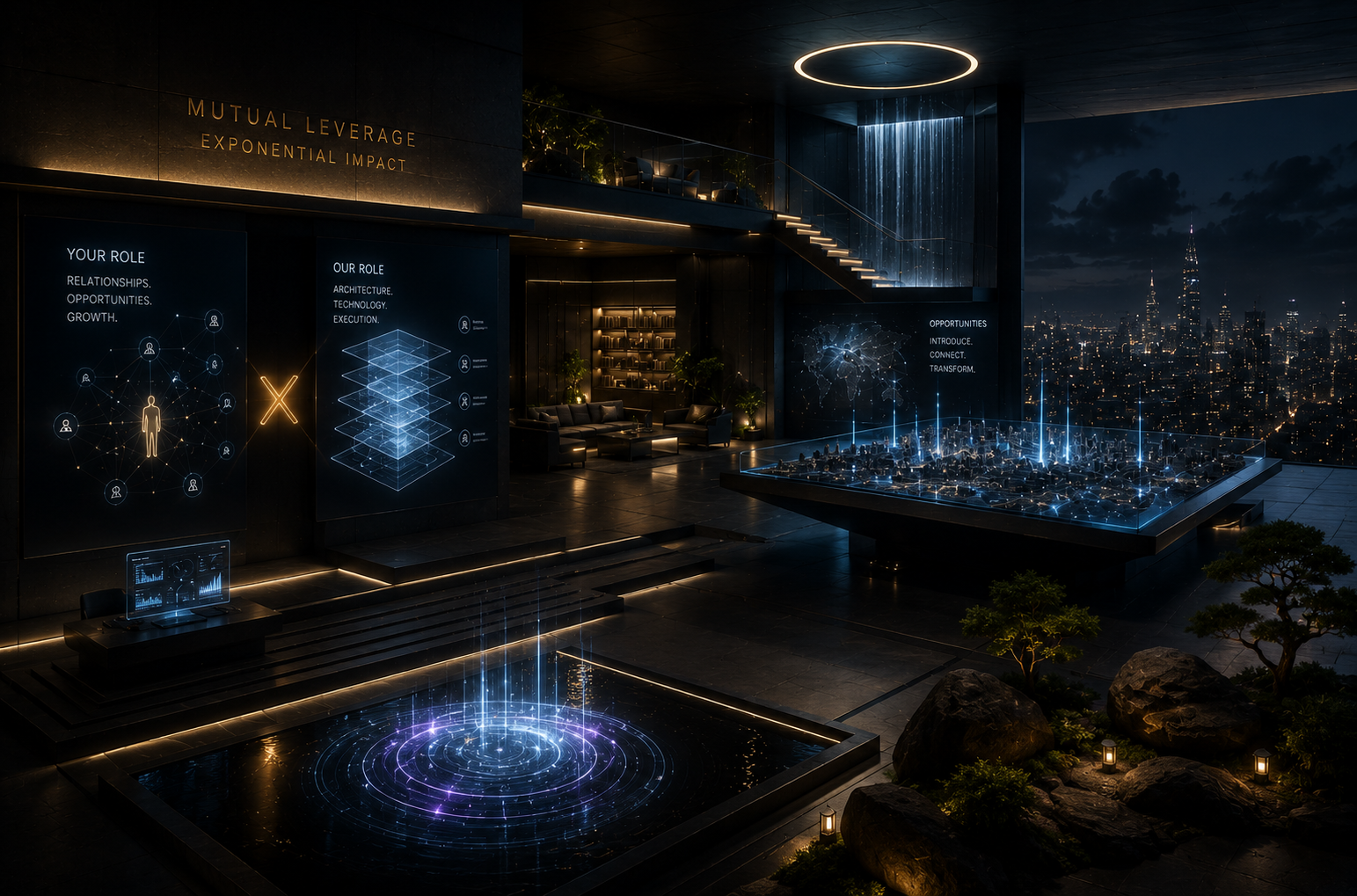
MUTUAL LEVERAGE
PARTNER ACCESS
ECOSYSTEM SYNCED
PARTNERSHIPSynergistic Integration
ROADMAPMutual Leverage
Stage 1 Launch
COMMERCECapital Alignment
REVENUEActive Pipelines
Shared Outcomes
CAPABILITYEcosystem Matrix
VELOCITYCompounding Rungs
Operational Power
FOUNDATIONACTIVE
PARTNER SYSTEM
CAPABILITY ROADMAP
01 — The Strategic Question
What Is the Fastest Path to Capital?
Every professional arrives at a crossroads. The question is not whether opportunity exists — it's which path converts ambition into income fastest, with the least friction and the highest leverage.
2-4 weeks. Focus on relationships and opportunity development. Source provides technology, authority, delivery, infrastructure. Near-term revenue. Compounding growth.
2-4 wksTime to Revenue
$2KCapital Needed
LowRisk Level
100%Support
The fastest route to capital is not to imitate an entire technology organization. It is to become increasingly valuable in the role where you can contribute fastest — while a proven system multiplies that contribution.
02 — Current State
Capability Assessment
An objective evaluation across the principal capabilities required to originate, present, close, and deliver high-value technology engagements. Red = independent.Green = with Source.
Domain Title
Independent: 10%With Source: 85%
IndependentWith Source
Presentation Infra
10%
80%
Market Credibility
10%
85%
Technology & AI
10%
90%
Offer Clarity
15%
85%
Prospect Access
30%
80%
Sales Execution
20%
85%
Solution Arch.
5%
95%
Delivery Capacity
5%
90%
Growth Capital
10%
85%
High-Ticket Potential
15%
85%
The assessment identified substantial gaps in independent infrastructure — and one significant opportunity: you do not need to independently construct every missing capability before becoming commercially productive.
03 — Strategic Alternatives
Four Paths Compared
The same commercial question has four possible answers. Each has real trade-offs.
Dimension
A: Build Alone
B: Fragmented
C: Affiliate
D: Source ★
Time to market
3-5 years
6-12 months
Immediate
2-4 weeks
Capital required
$50K-$200K+
$5K-$20K
$0
Activation fee
Technical burden
Extreme
High
Low
Minimal
Credibility
Self-built
Weak
Borrowed
Institutional
Delivery capability
Self-built
None
None
Full
Risk
Very high
High
Medium
Low
Compounding value
Slow
None
Minimal
Accelerating
Revenue potential
Delayed
Unlikely
Low
Near-term
Build Alone
1.2/10
Fragmented
2.5/10
Affiliate
4.0/10
Source ★
9.2/10
Unless you want to spend the next 3-5 years becoming a programmer, AI architect, infrastructure operator, product designer, enterprise salesperson, and delivery executive — the dominant strategy under your present constraints is specialization within a high-leverage team.
04 — The Operating Standard
Every Era Raises the Minimum Required to Compete
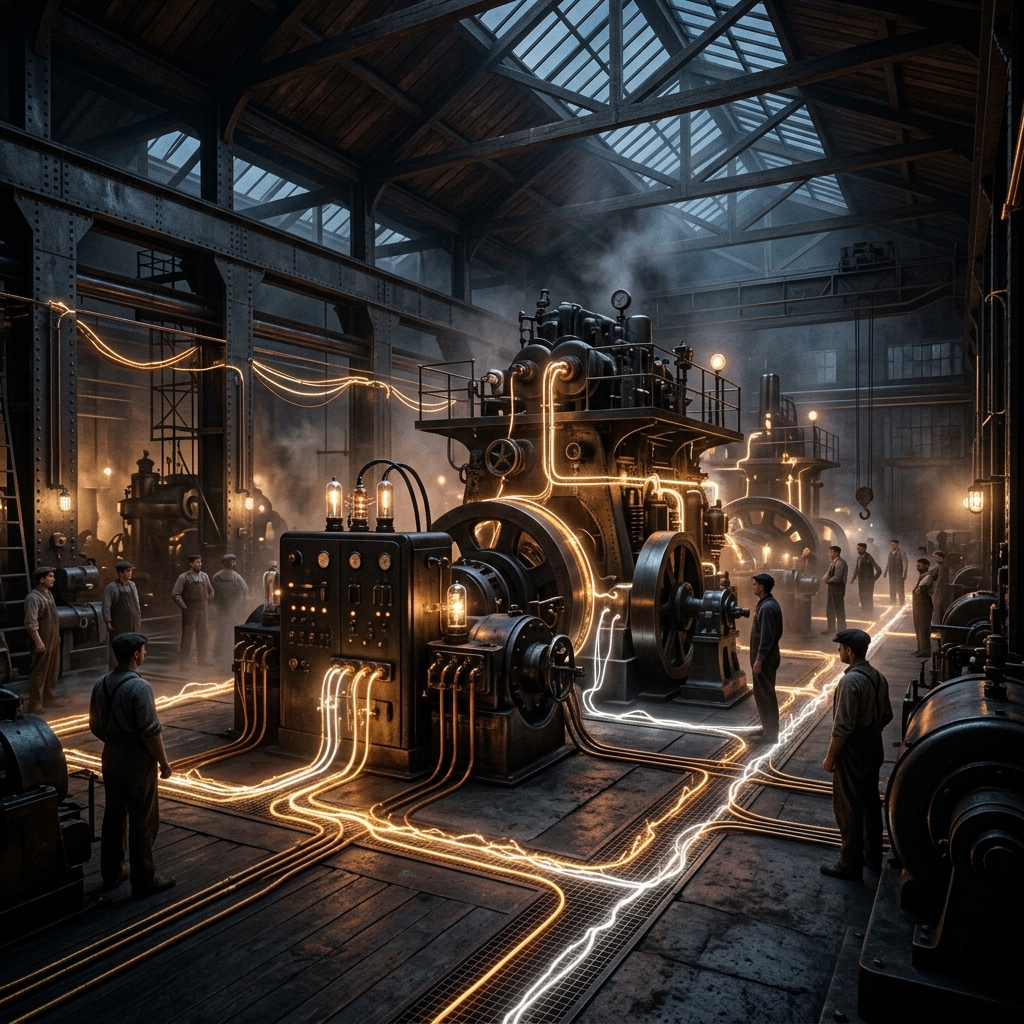
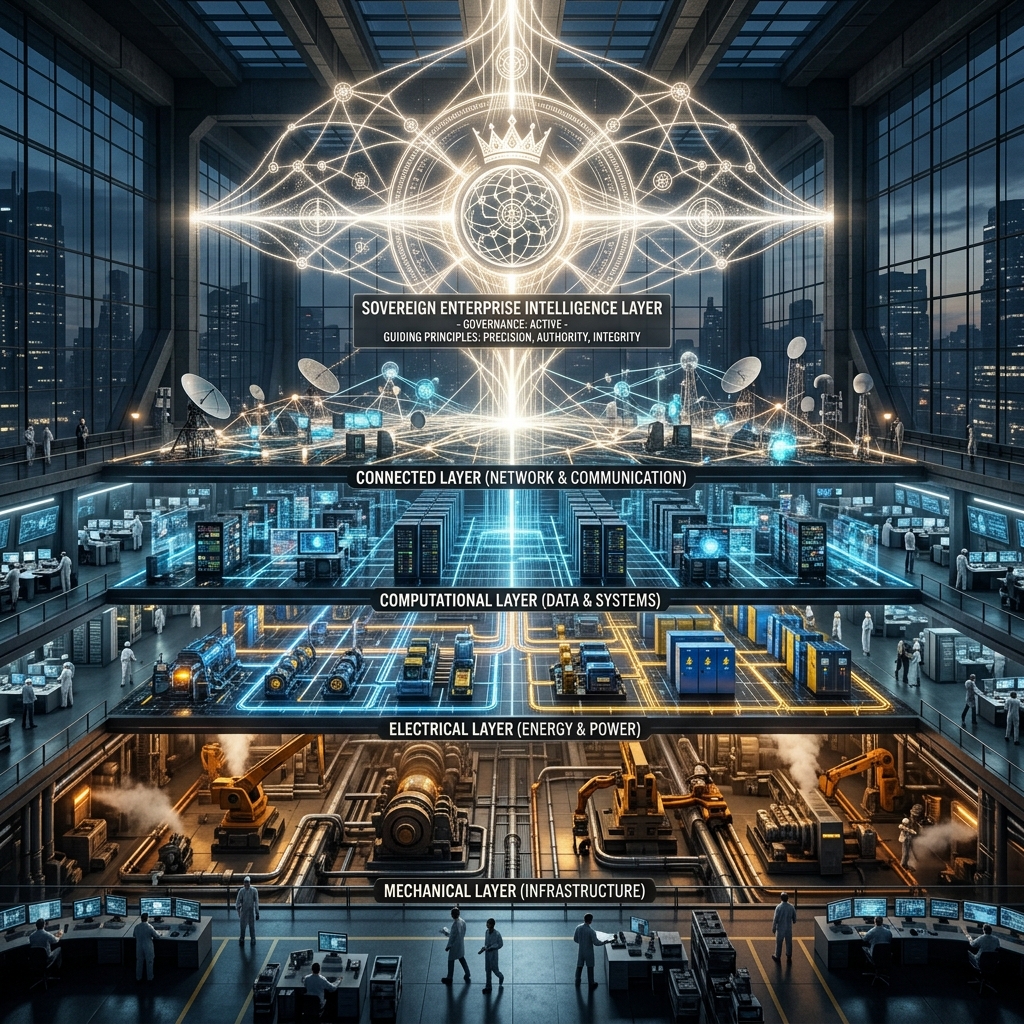
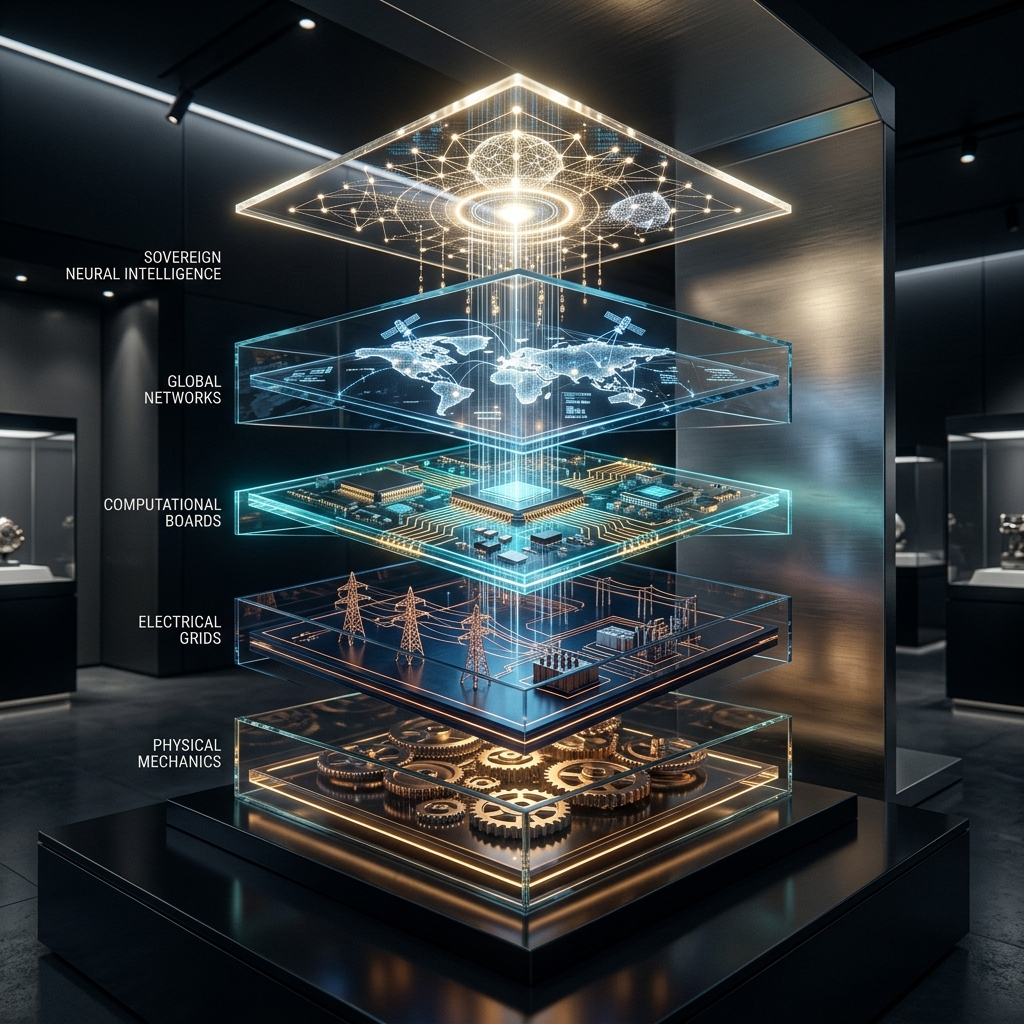
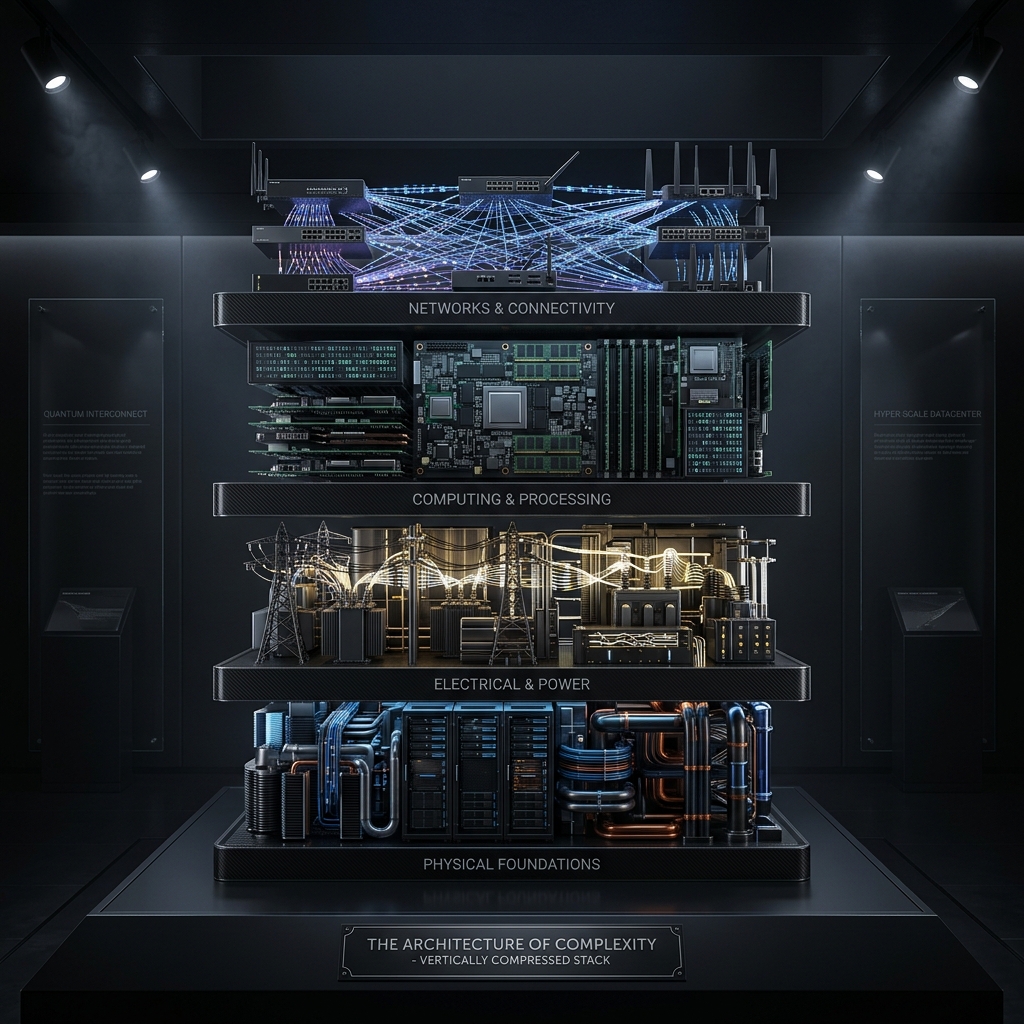
Every major infrastructure shift changes the baseline capability required to participate effectively in the economy. Businesses that ignored mechanization, electricity, computing, or the internet did not simply remain traditional. Over time, they became slower, more expensive, less visible, and structurally easier to outcompete.
STAGE 01 — MECHANIZATION
Machines multiplied muscle.
Mechanization allowed one operator to produce what previously required many people, animals, or hours of manual effort. The competitive advantage did not come from working harder. It came from operating through a stronger production system.
Business Consequence
Businesses that remained purely manual could not consistently match the speed, volume, cost, or repeatability of mechanized competitors.
Access to machinery became a condition of scale.
STAGE 02 — ELECTRICITY
Electricity made power continuously available.
Electricity separated productive power from location, daylight, physical strength, and individual effort. Factories, offices, communications, tools, and entire cities could operate through a common power layer.
Business Consequence
Once competitors electrified, remaining dependent on manual or mechanical power was no longer a stylistic choice. It became an operating disadvantage.
Reliable power became business infrastructure.
STAGE 03 — COMPUTING
Computers multiplied calculation and information.
Computing allowed organizations to process information, maintain records, model outcomes, coordinate operations, and make decisions at speeds impossible through paper and memory alone.
Business Consequence
A company could still possess experience and talent, yet lose to a competitor that could calculate, store, retrieve, analyze, and coordinate more effectively.
Digital information processing became operational literacy.
STAGE 04 — INTERNET + CLOUD
The internet multiplied connection. The cloud multiplied access.
The internet transformed connection, distribution, and reach. Cloud infrastructure extended this shift, establishing the core principle that capability does not always require ownership of the entire system—a business can use world-class infrastructure without constructing a data center.
Business Consequence
A business that remained disconnected lost speed, reach, discoverability, responsiveness, and access to modern infrastructure.
Connected operations and rented infrastructure became normal.
STAGE 05 — ARTIFICIAL INTELLIGENCE
AI multiplies cognition, production, and execution.
AI coordinates research, analysis, communication, software, lead generation, design, and operations. AI does not remove the need for human value. It changes which human value becomes most valuable.
Business Consequence
Organizations using AI scale at compounding speed, while manual competitors face a widening, permanent capability and productivity gap.
AI-enabled operation is the new participation threshold.
Mechanization
Electricity
Computing
Internet + Cloud
AI
The pattern is not new. The magnitude and speed of this transition are.
The Question Is Not Whether to Become an Engineer
There are three possible responses to the AI transition. For Roberto, Path C is the fastest credible route.
Path A: Build Alone
Spend years learning advanced software architecture, automation, data systems, infrastructure, AI orchestration, security, deployment, and system governance. Requires deep technical commitment, sustained capital, and a long development horizon.
Path B: Compete Without AI
Rely on personal effort, disconnected tools, limited presentation, and manual execution while competing against AI-enabled operators. Preserves familiarity but steadily reduces competitiveness and earning potential.
Path C: Qualified Access
Enter a governed environment where advanced technical systems, infrastructure, strategy, delivery, training, and support already exist. Specialize in the human relationships and commercial opportunities the ecosystem multiplies.
You Do Not Need to Build the Power Plant to Use Electricity
Historically, companies did not need to invent electricity, manufacture their own computers, construct the internet, or own a private data center to benefit from infrastructure. They needed access, operational literacy, and a practical way to apply the capability.
The requirement is not total ownership. The requirement is qualified participation.
Source Is the Access Layer
Source manages the entire underlying technical stack: AI and automation, software architecture, data systems, lead-generation, and custom deployment. The Foundation Activation establishes your first controlled position inside the ecosystem.
The portal is the visible access point. The Source capability stack remains governed, provisioned, and progressively available.
The New Standard Is Forming
Roberto does not need to become the infrastructure. He needs to earn and expand his position inside it.
Source provides the technical operating layer. Roberto develops and contributes the relationship, trust, and commercial opportunity layer. The next question is how their different assets multiply when deliberately combined.
05 — The Generations of AI
From Chatbot to AI Workforce
AI began as software that followed rules. It learned to communicate, assist, act, persist, and coordinate. The frontier is moving toward governed systems that preserve institutional knowledge and extend executive judgment.
GENERATION 01 — AUTOMATION
Software follows predefined rules.
The human designs every step. The software repeats it exactly as defined. The system is reliable but cannot adapt.
Defining Capability
Repeatability
Legacy Systems
Scripts, macros, traditional databases, rules engines, and Robotic Process Automation (RPA).
GENERATION 02 — CHATBOT
AI understands and generates language.
The human prompts. The system responds. The system can communicate, but the human still drives every single turn.
Defining Capability
Conversation
Early Systems
Generative chat interfaces, website conversational bots, general Q&A models.
GENERATION 03 — COPILOT
AI assists the human inside an existing workflow.
The human remains the operator. AI makes the human faster. The human is responsible for routing context and defining sequences.
Specialized AI operators coordinate defined roles.
Work is distributed across research, analysis, communication, and execution roles. Humans supervise structured handoffs, quality controls, and permissions.
Defining Capability
Coordination
Orchestrated Labor
Opportunity qualification, financial analysis, documentation, compliance, and quality control.
GENERATION 07 — INSTITUTIONAL INTELLIGENCE
AI preserves and applies how the institution operates.
The system gains organizational memory, compliance policies, permissions, risk controls, executive decision standards, and human escalation rules.
Defining Capability
Institutionalization
Private Executive Intelligence
Governed systems built around a principal's approved context, reasoning patterns, and escalation boundaries.
1
2
3
4
5
6
7
Automation
Chatbot
Copilot
Agent
Persistence
Workforce
Institution
GENERATION 01 — AUTOMATION
Software follows predefined rules.
The human designs every step. The software repeats it exactly as defined.
A model is not an agent. An agent is not a workforce. A workforce is not yet an institution.
Most businesses still evaluate AI as a chatbot or an employee productivity tool. That describes only the early operating generations.
A chatbot responds. A copilot assists. An agent executes. A persistent agent continues across sessions and time. An AI workforce distributes work across specialized digital roles. Institutional intelligence adds organizational memory, permissions, policy, quality control, and executive decision standards.
The strategic advantage no longer comes merely from access to a powerful model. It comes from the architecture that converts intelligence into reliable, coordinated, and governed execution.
Where Today's Systems Actually Fit
Product names often conceal major architectural differences. Generation is determined by the complete operating configuration.
Claude Code
Gen 4 — Agentic Executor
Reads codebases, edits files, runs commands, uses tools, and completes software objectives. Subagents, skills, hooks, and team patterns can support Generation 6-like coordination in technical workflows.
Codex
Gen 4 — Agentic Executor
Completes end-to-end tasks, edits files, runs commands/tests, works in isolated environments, and executes longer-running objectives. Parallel worktrees and scheduled tasks support Generation 6-like workflows.
OpenClaw
Gen 5 — Persistent Agent
Adds persistent runtime, gateway, memory, sessions, channels, schedules, skills, routing, subagents, and tool policies. Acts as a substrate for Generation 6 workforce architecture.
Hermes Agent
Gen 5+ — Persistent Adaptive Agent
Adds persistent memory, reusable and self-improving skills, scheduled operations, broad tools, model flexibility, and subagent delegation to support Generation 6 workforce patterns.
Source Architecture
The Integration, Orchestration & Governance Layer (Building Toward Gen 7)
Source is the architecture layer connecting execution, persistence, workforce coordination, memory, software, interfaces, permissions, quality control, human oversight, and governance. Source builds and deploys toward Generation 7 institutional intelligence by integrating execution agents, persistent environments, and custom-designed governance.
Governance Disclosure
The Seven Operating Generations is Source's applied framework. Not every Source engagement includes all seven generations. Actual configuration depends on scope, integrations, data, risk, and deployment phase.
SOURCE OPERATES BEYOND THE CHATBOT LAYER
The objective is not to add another AI tool. It is to create a controlled operating system around a real commercial objective.
Roberto does not need to build every layer himself. He needs qualified access to the architecture and a valuable role inside it.
Source Engineers the Intelligence. You Command the Mission.
You are not being asked to rebuild Source. You are being trained to operate through Source. Inside the Source Operator System, trained operators command specialized AI crews across two major mission lanes.
Lane A
Commercial Operations
Identify and qualify businesses in need of AI, automation, enterprise software, data infrastructure, or digital platforms.
Detect → Research → Engage → Qualify → Escalate → Close
Operate through a controlled cockpit featuring daily briefings, active relationship dossier tracking, simulated playbooks, and progression tools.
02. Direct Specialized Crews
Direct 18 different AI specialists, including Scouts, Analysts, Quant Translators, Risk Officers, and Compliance Reviewers under strict bounds.
03. Build & Deploy Loadouts
Build campaign briefs and select loadouts from Levels 1 to 5 (Signal to Full-Spectrum). Higher loadouts require stronger qualification and authorization.
Ecosystem & Personal Pathway
Preview the Quant Lab managing thousands of strategy ensembles. Qualified operators may unlock a voluntary path to allocate personal earnings directly to compound alongside the system.
Truth Boundary
Activation does not automatically grant unrestricted cockpit access, live leads, capital presenting license, Performance Console access, or trading accounts. It secures your first controlled pathway position.
08 — Source Capabilities
What Assembles Around Your Opportunities
When you bring a qualified opportunity, Source mobilizes the following capabilities behind it. You do not build, own, or operate these — you connect organizations to them.
AI Systems
Custom automation
Software
Custom-built
Workflow
Enterprise-grade
Lead Gen
Outreach systems
Data Systems
Intelligence
Infrastructure
Dedicated
Orchestration
Multi-agent
Investor Ready
Presentation
Modernization
Operational
Consoles
Operating systems
Research
Market analysis
Architecture
Solution design
09 — What You Receive
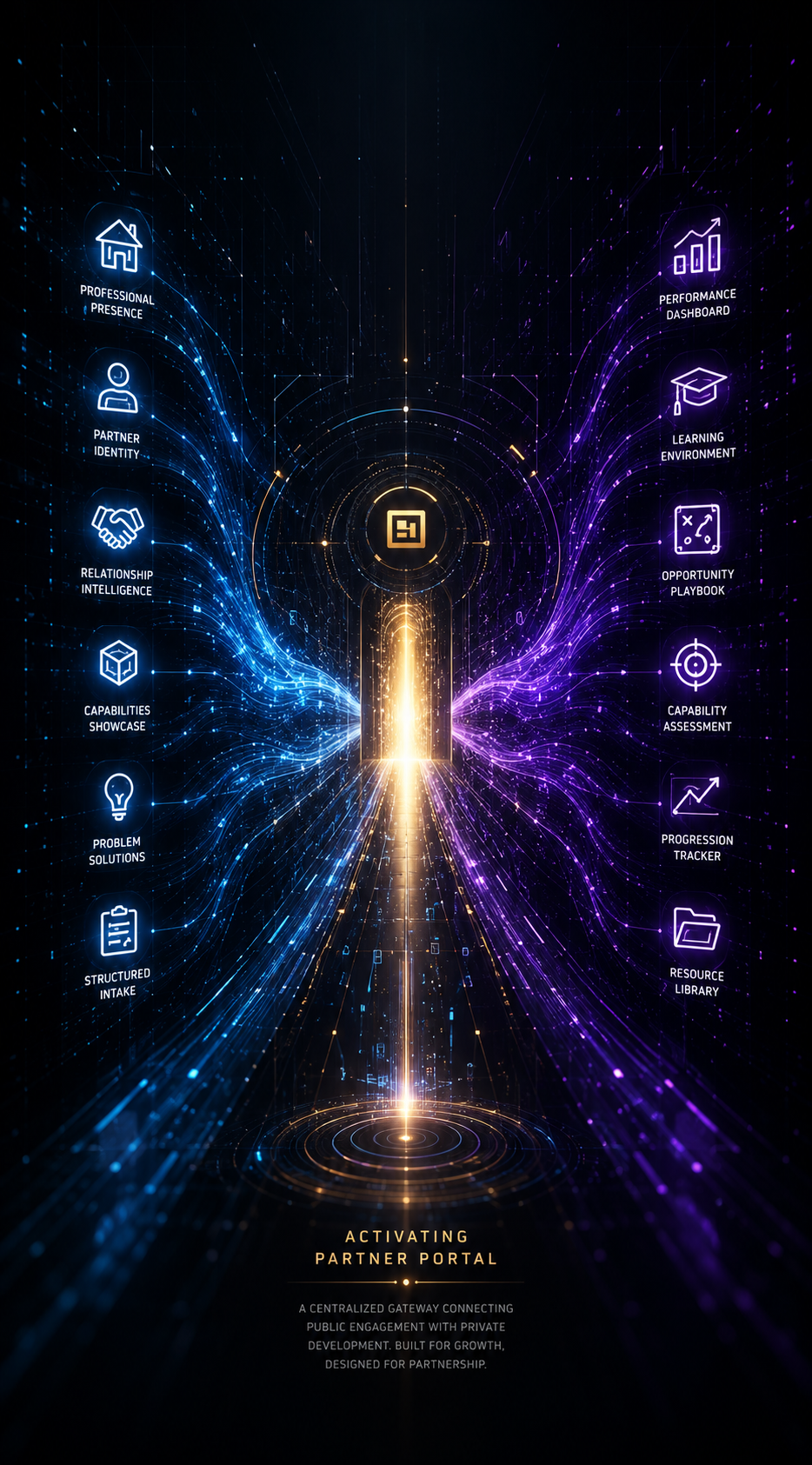
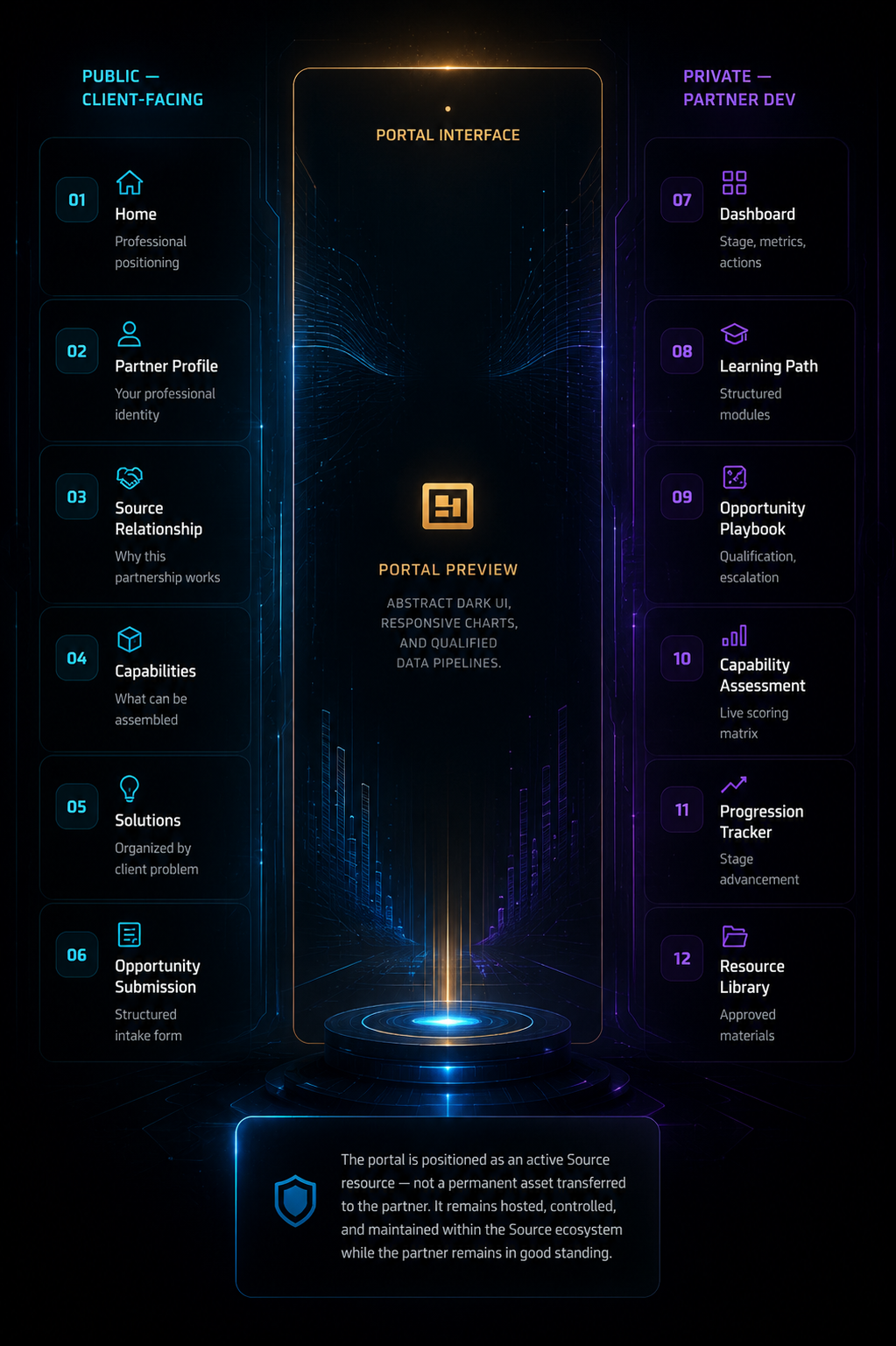
The Foundation Activation Portal
A professional partner portal positioned within the Source ecosystem. Your public-facing presence for client conversations, plus a private learning environment for development.
Public — Client-Facing
01
Home
Professional positioning
02
Partner Profile
Your professional identity
03
Source Relationship
Why this partnership works
04
Capabilities
What can be assembled
05
Solutions
Organized by client problem
06
Opportunity Submission
Structured intake form
Portal interface
Private — Partner Dev
07
Dashboard
Stage, meters, actions
08
Learning Path
Structured modules
09
Opportunity Playbook
Qualification, escalation
10
Capability Assessment
Live scoring matrix
11
Progression Tracker
Stage advancement
12
Resource Library
Approved materials
The portal is positioned as an active Source resource — not a permanent asset transferred to the partner. It remains hosted, controlled, and maintained within the Source ecosystem while the partner remains in good standing.
10 — The Foundation First
The F-35 Principle
You want to fly the most advanced autonomous systems. But first you need to ride a bicycle. Foundation Activation is the bicycle. Not a downgrade — the mandatory first step.
🚲
Bicycle
$2K
Foundation Portal
→
🚗
Car
$2K-$10K
Expanded Capability
→
✈️
Prop Plane
$10K-$30K
Co-Provisioning
→
🚀
F-35
$15K-$50K+
Full Clone
Velocity & Capability Growth
Skipping the foundation doesn't accelerate the journey — it kills the pilot. The portal is the first controlled step in a progression that leads, over time, to autonomous operations and full integration.
11 — The Path Forward
Progression Architecture
Greater access follows greater responsibility — not just payment. Each stage requires real evidence of development.
Stage 1
Opportunity Partner
Learn positioning. Make introductions. Register opportunities. Attend approved meetings.
🔓 Portal · Core training · Intake
Stage 2
Solutions Partner
Deeper capability presentations. Independent qualification. Co-preparation of proposals.
Deeper system access. Source-provided leads. Advanced tools. Expanded commission structure.
🔓 System access · Leads
Capability
Stage 1
Stage 2
Stage 3
Stage 4
Portal Access
Full
Full
Full
Full
Training
Core
Extended
Advanced
Complete
Presentations
Guided
Independent
Co-led
Autonomous
Discovery
—
Observe
Participate
Lead
Delivery
—
—
Ride-along
Active
Lead Assignments
—
—
—
Allocated
Commission
Base
Enhanced
Expanded
Maximum
Beyond Stage 4: The conversation shifts to full integration — advanced system deployments, deeper infrastructure access, and expanded partnership architecture.
12 — Investment Structure
Activation and Investment
The activation fee is not a product purchase. It is an activation payment for a provisional privilege — the right to be positioned, educated, and supported within the Source ecosystem.
$1,000
50% — To begin work Nonrefundable activation
→
Build Phase
Portal construction Positioning · Pages · Forms
→
$1,000
50% — At launch-ready Before activation & release
Foundation Activation
Portal, positioning, learning path, capability assessment, progression system
Data foundation fully populated — behavioral, relationship, communication datasets ready
Included
Full Clone Integration
AI clone built from accumulated dataset. Partner voice, judgment, patterns replicated.
$15K-$30K+
Autonomous Operations
Lead Engine + AI agents operating on partner's behalf
$30K-$50K+
Full Source Franchise
Complete infrastructure deployment. Full technology stack.
$50K-$100K+
Revenue share: Partners earn commissions on engagements they help originate. Typical engagements range from $10K to $250K+. Commission structures are defined in a separate written agreement.
13 — Depth
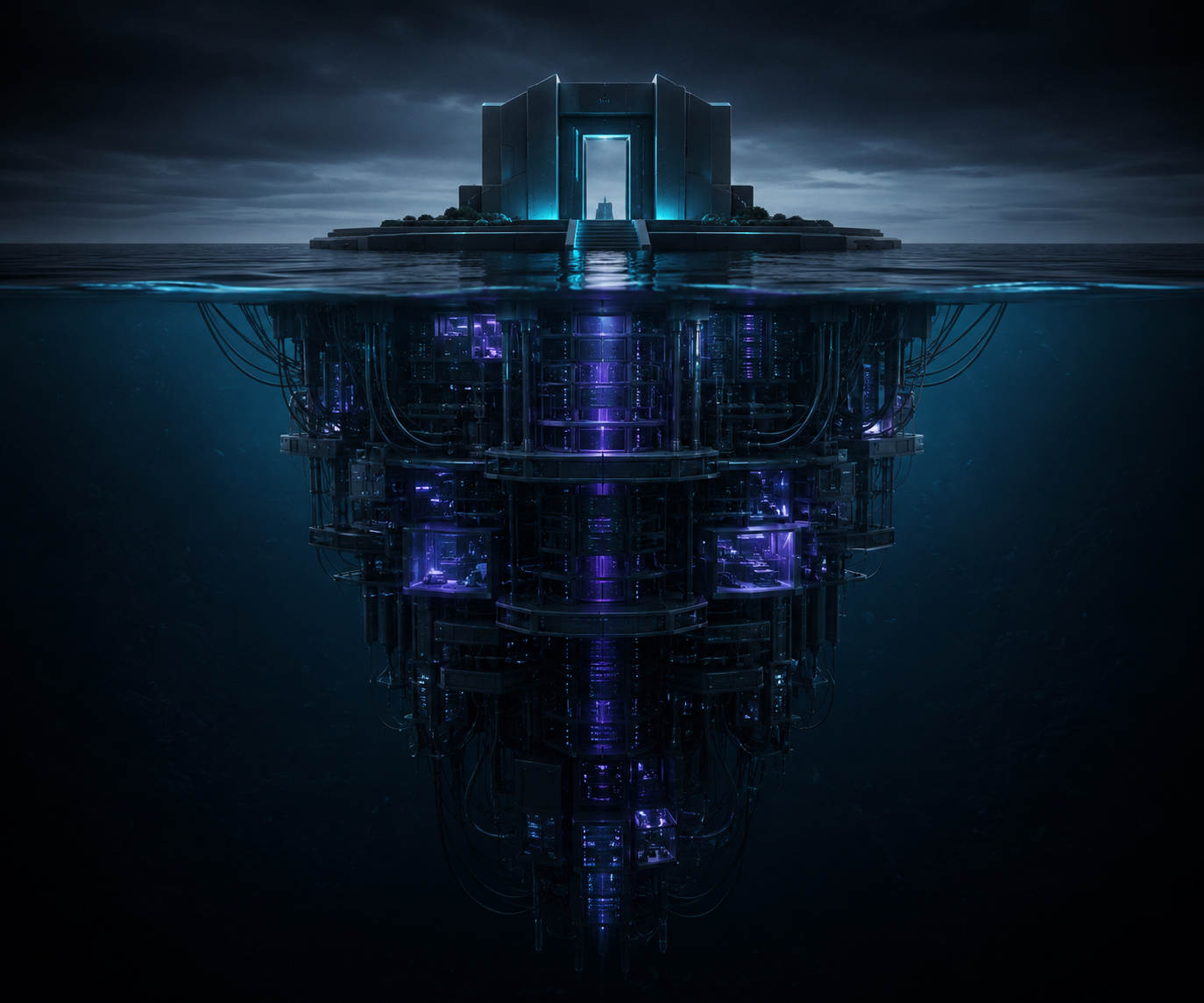
What You See Is the Foundation
Source operates at depths that are not visible at every stage. Additional capabilities become available as you reach the stages where they activate.
Source invests in preparing your future architecture now — even though you won't see or experience that work until you've reached the stage where it activates. This is by design.
14 — Trajectory
Projected Journey
A phased view of how the relationship develops over time. This is a projection, not a guarantee.
Weeks 1-4
Foundation
Portal launched and configured
Profile and capability pages live
Learning path initiated
First opportunities identified
Capability baseline established
Weeks 4-12
Activation
Partner begins introducing opportunities
First qualified opportunity enters pipeline
Learning modules completed
Stage 1 → Stage 2 progression
First discovery meeting (partner attends)
Months 3-6
Revenue
First paying engagement closes
Partner participates in discovery and delivery
Commission earned on first engagement
Stage 2 → Stage 3 progression
Ride-along learning accelerates
Months 6-12
Expansion
Multiple opportunities in pipeline
Independent qualification demonstrated
Expanded tool access unlocked
Stage 3 → Stage 4 progression
Source may provide selected leads
Months 12-24+
Integration
Full integration discussion begins
Custom deployment planning
Advanced system access
Expanded partnership architecture
Foundation becomes the launchpad
Projected Trajectory
Hover over timeline phases on the left to see details about the strategic execution milestones.
DATA STREAM: ACTIVE
LLM ROUTING: AUTO
PIPELINES: SYNCED
SECURE LINK: SEC
Positioning Quality10%
Active Pipelines0
Capability Meter15%
Franchise Equity0%
Allocated Load
CPU
RAM
NET
DSK
Resource usage
Telemetry log feedSystem Online
[SYS] Initializing agent environment...
[SYS] Waiting for timeline hover...
15 — Commercial Projection
Engagement Types & Revenue
Typical engagement values and commission ranges for opportunities originated through the partnership.
Engagement
Value
Commission
Source Rev
Lead generation
$10K-$25K
10-15%
$8.5K-$21K
Software platform
$25K-$75K
10-15%
$21K-$64K
AI / automation
$50K-$150K
10-15%
$42K-$127K
Full infrastructure
$100K-$250K+
10-15%
$85K-$212K+
Lead Gen
$10-25K
Software
$25-75K
AI Deploy
$50-150K
Full Infra
$100-250K+
Primary goal: Originate or help advance at least one credible opportunity capable of producing a $10,000+ Source engagement within the first 90 days.
The First Step
If this projection aligns with your goals, the next step is a qualification discussion. We'll review your current network, identify your top prospects, and confirm whether Foundation Activation is the right fit.